Sunday
November 15th
18:30
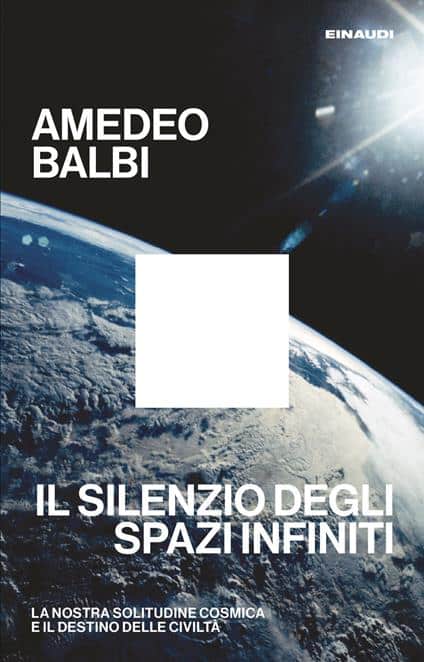
When science began searching for intelligent life, expectations were sky-high. It was almost taken for granted that, within a few years, we would be picking up radio communications from other civilizations. But the universe has turned out to be much quieter than expected. Could this be the funeral dirge of species intelligent enough to aspire to the stars, but not wise enough to avoid burning themselves? Or is it the silence of civilizations that, once they glimpsed the edges of uncontrolled expansionism, have relearned how to live with their world, giving up on becoming masters of the cosmos? Amedeo Balbi (The Silence of Infinite Spaces: Our Cosmic Solitude and the Destiny of Civilizations, Einaudi) tries to answer for us.
When science began searching for intelligent life, expectations were sky-high. It was almost taken for granted that, within a few years, we would be picking up radio communications from other civilizations. But the universe has turned out to be much quieter than expected. Could this be the funeral dirge of species intelligent enough to aspire to the stars, but not wise enough to avoid burning themselves? Or is it the silence of civilizations that, once they glimpsed the edges of uncontrolled expansionism, have relearned how to live with their world, giving up on becoming masters of the cosmos? Amedeo Balbi (The Silence of Infinite Spaces: Our Cosmic Solitude and the Destiny of Civilizations, Einaudi) tries to answer for us.
scrittorincittà is supported by




scrittorincittà was created with the patronage of the European Commission Representation in Milan